ASE researcher delivers keynote on GenAI in Finance at Amsterdam Fund Awards
16 June 2026
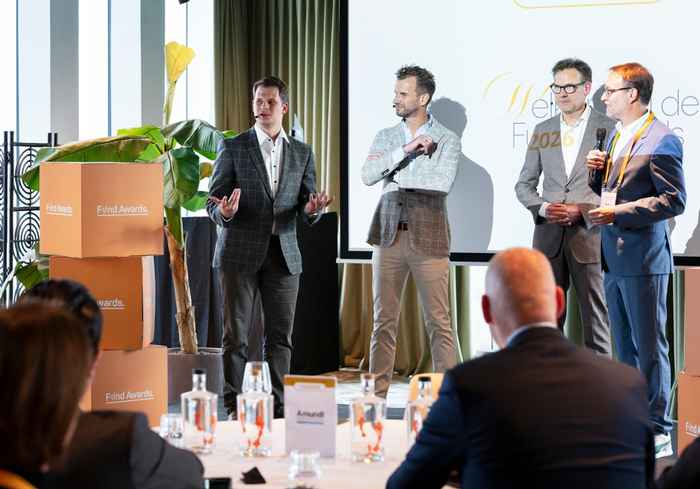
The Fund Awards bring together leading voices from the Dutch fund and wealth-management industry to recognise outstanding performance and discuss the themes shaping the future of the sector. This year’s programme placed artificial intelligence at the centre of the conversation, with contributions from senior industry experts, including the Chief Analytics Officer from Van Lanschot Kempen (wealth management and private banking) and the Fund Manager of the Year.
Threat or opportunity?
In his keynote, the Amsterdam School of Economics (ASE) researcher argued that artificial intelligence should not be seen primarily as a threat to wealth management, but as a major opportunity. But it must be used responsibly, transparently, and in the right context. ‘AI can be a powerful tool in wealth management, but it should not be treated as a universal replacement for human judgement,’ Trimborn said. ‘The key is to understand where AI can reasonably assist and where the expertise of the wealth manager remains essential.’
A central theme of the keynote was the distinction between financial products and advisory situations where large amounts of reliable data are available, and more complex areas where data is limited, pricing is less transparent, or client needs require deeper interpretation.
For standardised products with broad data availability, AI can help wealth managers analyse information more efficiently, support client conversations, and improve the consistency of advice. Used well, these tools can free up time for advisors and allow them to focus more attention on the individual client relationship.
AI and the wealth manager's role
A central theme of the keynote was the distinction between financial products and advisory situations where large amounts of reliable data are available, and more complex areas where data is limited, pricing is less transparent, or client needs require deeper interpretation.
For standardised products with broad data availability, AI can help wealth managers analyse information more efficiently, support client conversations, and improve the consistency of advice. Used well, these tools can free up time for advisors and allow them to focus more attention on the individual client relationship.
However, Trimborn stressed that the value of the wealth manager becomes even more important in situations where products are less liquid, less frequently traded, or harder to price. In such cases, historical data may be insufficient, model outputs may be uncertain, and the interpretation of risks and opportunities requires professional judgement.
‘The future is not about replacing the wealth manager with AI,’ Trimborn said. ‘It is about combining the strengths of both: using AI where it can support evidence-based advice, while relying on experienced professionals where context, judgement, trust, and responsibility matter most. After all, providing financial advice is a regulated profession for good reasons.’
Thoughtful integration
The keynote also addressed the importance of responsible implementation. In financial advice and client management, AI must be used with a clear understanding of its limitations. Human advisors remain accountable for the quality of advice and the suitability of recommendations. For Trimborn, this means that the most successful firms will not be those that simply adopt AI the fastest, but those that integrate it thoughtfully into their advisory processes.
The message to the audience was clear: AI is becoming an increasingly important part of finance, but its greatest potential lies in assisting professionals, not replacing them. In wealth management, the future will depend on knowing when to use AI, when to challenge it, and when to rely on the insight and responsibility of the human advisor.