UvA launches research centre on social and economic wellbeing
24 April 2026
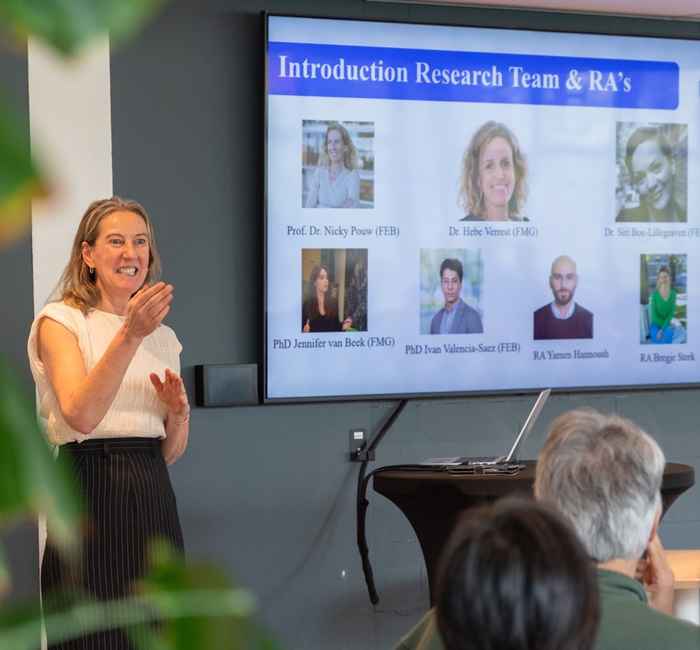
ASEWeBe brings together economics, behavioural science and governance to better understand how people live and what they need to thrive. UvA professor of Economics of Wellbeing Nicky Pouw is one of the key figures behind the initiative. The Centre's research will be conducted at Macro and International Economics (MInt) section of the Amsterdam School of Economics.
Understanding wellbeing in everyday life
Economic growth does not benefit everyone equally. Many people face uncertainty about income and livelihood security. The centre studies wellbeing across three dimensions: material, relational and personal. This helps researchers see how people experience and respond to these challenges.
Combining research and practice
ASEWeBe combines fundamental research with applied work. A key focus is the development of participatory tools, such as the Wellbeing Dashboard. This tool allows residents and policymakers to define and measure wellbeing together. The methodology has been tested since 2021 in several Amsterdam neighbourhoods. This has led to citizen-defined indicators and validated dashboards in 5 neighbourhoods.
Collaboration and education
The centre works with municipalities, civil society, private partners and international networks to turn research into practical solutions for more inclusive and resilient economies. ASEWeBe also contributes to education through Community Service Learning, curriculum development and PhD training in participatory methods.